Sky Manor Window and Door Info: SECTION 4
The sales process, the install, and setting proper homeowner expectations
(This is a training and reference page and not for customers!)


Section 4: The Sales Process, Install, and Homeowner Expectations
One of the biggest challenges for any salesperson is to actually get in front of a homeowner. Some companies spend thousands or even millions of $$ every year to get leads.
Companies like ours can take advantage of our ability to get on roofs and pitch new windows to all of our homeowners! We could and may spend some money on an ad campaign some day down the road, but, as many of you already know, the best/easiest contracts to get usually come from referrals.
We need to build your confidence in the entire window sales process so you feel more comfortable bringing up the window conversation to everyone AND you also know how to upsell into higher end windows. This right here is the entire goal of this WHOLE training page!!
Sales Opportunities
How to get in front of more clients
DOOR KNOCKING
Feet on the street. I see plenty of window companies in my neighborhood. There are lots of houses built in the 90s/early 2000s that are ripe for the picking. Most of these houses have builder grade vinyl windows that are way past their expiration dates. Looks for grids that have fallen, foggy glass, and yellowed vinyl.
CURRENT CUSTOMERS & REFERRALS
Your current roofing customers are a great place to talk windows. The hardest part of marketing is getting in front of a new client. You're already there so why not talk windows, too, right? Along with that, customer referrals to their friends, neighbors, family members, and co-workers are some of the best/easiest sales to get! Put your clients to work for you!!
NETWORKING
Building a strong network of referral partners is vital to filling your pipeline in addition to or without having to knock doors. Realtors, home inspectors, insurance agents, property managers, window cleaning companies, interior remodelers, etc. can all be great people to network with. Find in person events, LinkedIn, Facebook, Instagram, go to open houses, call RE signs, stop by their offices, etc. Make a goal of adding 2 people every week to your network.
SOCIAL MEDIA
Along with the digital networking part, Facebook neighborhood groups and Nextdoor are great places to find homeowners looking for window recommendations. Join these groups and make yourself available to answer questions and make quality recommendations regarding product and such. Get your network to put your name and phone number out there when they see such questions!
The Sales Process
The basic sales process, no matter the product, follows a pretty standard format:
- Approach the client
- Discover client needs
- Provide a solution
- Close the sale
- Complete the sale and follow up
Window and door sales are no exception. The approaches are lined out in the Sales Opportunities section above. As you feel more and more comfortable with the info on the first 3 pages, you'll be more skilled at asking the right questions which will allow you to make a proper recommendation. The rest is all the same as you're used to with roofs--get a signed contract and get the install scheduled.
A very important thing to understand is we will never be one of the cheap window companies. We've been doing this long enough now to know that we don't want to compete at that low-cost level. That's not our target market/client.
There's a lot that goes into providing high-quality windows and top notch installation. There's just too much that can go wrong and jobs can go upside-down very quickly. Also, you really get what you pay for when it comes to windows and doors. Builder-grade windows are built to be cheap and made for high volume orders. They really aren't a great replacement window option.
I want you all to think of the Pella 250s as our entry level window. Save the Encompass line for situations like real estate where they just need the cheapest solution. Now, it's still very important that, even in this situation, we still price these jobs well. Builder grade windows are often a bigger challenge for the installers due to the windows coming in not level or square making the install more of a challenge (and more costly).
As a few of us have learned the hard way, it's actually better to walk away from a bad window job and just go find more clients. Consider this, your higher-income clients will pay for quality if you do a great job educating them on the benefits and show them just how awesome the higher-end windows are. There are many homeowners out there where quality and coolness factor is worth spending more money.
I want you to feel comfortable selling windows and doors at a higher-than-you'd-be-comfortable-paying amount. Renewal By Andersen, Champion, Pella Colorado, etc. do like 300 million in replacement window sales in Colorado every year. They do deals that would make your jaw drop! Yes, we can crush them in price, but remember, we sell very high quality windows and have a killer installer in Anthony so we don't need to short-change ourselves. Lean into that and, if you get in front good clients, you won't have trouble getting contracts!
Discovering Needs and Making a Recommendation
All great sales people ask lots of questions. Ask questions that help you uncover concerns and get the homeowner to open up about why they want new windows the most. Listen more than you talk. I know, we all love to show off how much we know. There's a great saying, we have 2 ears and 1 mouth for a reason--listen twice as much as you speak!
With windows, you need to learn what their main needs and concerns are. Is it interior comfort? Lowering their energy bills? Blocking out the sun? Blocking out the sounds outside? Do they want function or beauty/style?
Sales people will often go the path of least resistance. We'll see white vinyl and just go with more white vinyl as our recommendation when maybe they'd want black fiberglass instead! Windows are like pieces of art in certain homes, especially ones with great views of the mountains. You want to showcase that. If your homeowner is going to be looking outside at these windows all of the time, you want them to look amazing. Educate them on what the options are. Not everyone does their research so it's your job to make them aware of what is available.
Psychologically, by showing them what's available to them, you allow them to choose what they want. This is so powerful. Open the door and let them walk through it. If you can show them something that's more expensive than what you think they want, one, you never know when someone might decide to go for the nicer windows and two, you've "stretched" what they think the windows will/should cost making the more affordable option seem like a great deal! And, when you can give them a couple of options to choose from, it's like you're giving them multiple quotes already and this often satisfies their need to go out and talk to multiple companies.
I highly suggest giving them either a good/better/best scenario, or, at least a better/best one. The "better" option being the one you're hoping they'll choose and the "best" option being the one that would be gravy if they went with it.
Changing Up Window Styles
When evaluating what the homeowner wants when it comes to window styles, it's important to understand what's possible. Keep in mind, every window we have made are custom-made. When we submit a window list, the manufacturer makes these windows specifically for their order.
Some brands only carry certain window styles (for ex. Pella doesn't make a wood slider window). And, each brand will have a minimum and maximum width and height for each window style. It's virtually impossible to memorize them all, but it would be good to get familiar with which type of window will generally work in which sized opening. I say this because some homeowners might have casement windows now and want to switch to a hung or slider window to save money or they just don't like casements.
On aluminum windows, casements used to be synonymous with the cheap crank windows that never worked. When it comes to wood windows, casements are actually the gold standard! Why? They generally provide the most glass/viewing area and the cleanest look (no frames blocking the center of the window like on hung windows). Sliders and twin casements (two casements mulled together) actually provide a very similar look, so a slider is a great cost-saving option in this situation.
When it comes to insurance claims, it's imperative we document what's existing first. If they want to change styles for the actual order, that's okay, but we have to quote out what's existing, so just make a note of what they want to do so we can update the list after the windows are approved.
For cash deals, you don't need to do that. Just notate what they want. This is why it's so important to label the windows properly as it will be very easy to get confused. Also, you need to take good photos of each elevation from the exterior showing all of the windows. This will help me out a ton when it comes to verifying what you've put in your window list in order to get you a good quote. Grids, for example, are easy to screw up so photos help a ton there. If you're not putting on grids, make sure you notate that on the window list.
Closing the Sale
You've probably heard the saying ABC or Always Be Closing. There's a lot of truth to this. It's your job to get the deal to the finish line, if it's a quality deal. If it's not, it's also your job to know when to walk away (you gotta know when to fold 'em).
Not everyone is our customer and be okay with that. But, when you find yourself in front of a good prospect, it's important you know how to move the job forward appropriately.
My favorite phrase is, "The next step is..."
For windows, the first step is to do your discovery (look at the windows, take your photos, ask discovery questions to learn what they want, and then document the quoted windows). The next step after that is for us to put our quote(s) together. The next step then is to go over the proposal and walk them through the contract. Next step is for them to sign, pay their deposit, and we'll come out to do the official measure for the order.
Use this type of language as if you already have the job. Make it easy for them to say yes. Open the door, let them walk through it. ABC doesn't mean skip to signing the contract, it means covering all of the bases you need and use language that leads toward signing the contract and then, once you recognize they are ready to move forward, stop talking and get that contract signed!
Do NOT keep talking and talk yourself right out of the sale!!
Install Options
A big part of the closing the sale process is deciding which install method the homeowner wants to go with. There are 2 main installation options: full-frame replacement and block-frame. It's important to understand the pros and cons of each.
The cheapest option is the block-frame replacement. 90% of the companies out there use this method because it's the cheapest labor, the fastest, and the easiest, but it's not necessarily the best.
There is no one size fits all approach here as certain situations (siding, brick, stucco, etc.) will dictate which method is appropriate. Make sure you evaluate each window individually and don't make assumptions!
Knowing these options is a major education component that will help you stand out from other companies and help you close deals for more money.
A great next step question would be something like, "Of the two options, which one would you like to go with?" or, "Which option are you leaning toward?" Something along this line. These kind of questions are called mico-commitments and help move your homeowners in the direction of saying yes.
Just FYI, typically, we charge $500 per opening for the full-frame replacement. This is for your standard, run-of-the-mill wood trim house. Windows with brick surround I'd recommend going block frame. Stucco, block frame is definitely easier, but we do have a stucco contractor who does great work. Definitely gonna be more than $500, though!
Full Frame Replacement
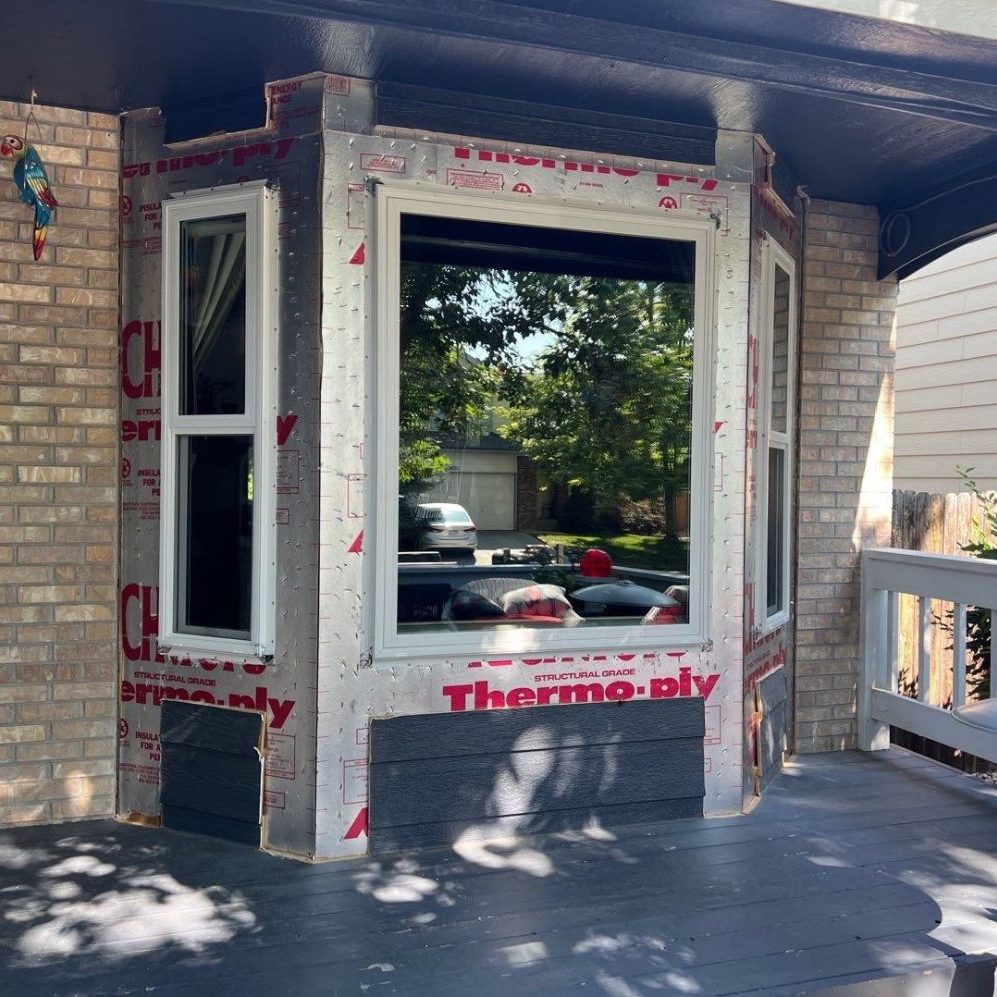
Using a full frame replacement window, as the name infers, typically requires replacing the existing window frame, sashes and screen. This can usually be done with a utility knife, screwdrivers, pry bar, hammer, putty knife and circular saw, depending on your current window. We generally use windows with a nail fin attached for this type of install.
Nail fin windows are frequently seen in new construction projects, or any remodel where the walls will be exposed to the frame (studs). These windows feature a thin piece that extends from the window itself that follows around the outer edges of the window frame. When installing the window to a new frame, this nail fin attaches the window directly to the house’s studs and is unseen between the interior and exterior of your home.
Adding a nail fin window can be hard work and may require the addition of a new window frame or removal of siding so the installer can attach the nail fin to the studs. If you are wishing to install a nail fin window to a present wall in a section of the house where a stone or brick exterior would also have to be replaced, the job might not be worth the time demanded.
That said, it is the best way to get the largest window and provide the best water intrusion protection.
Block-frame Replacement
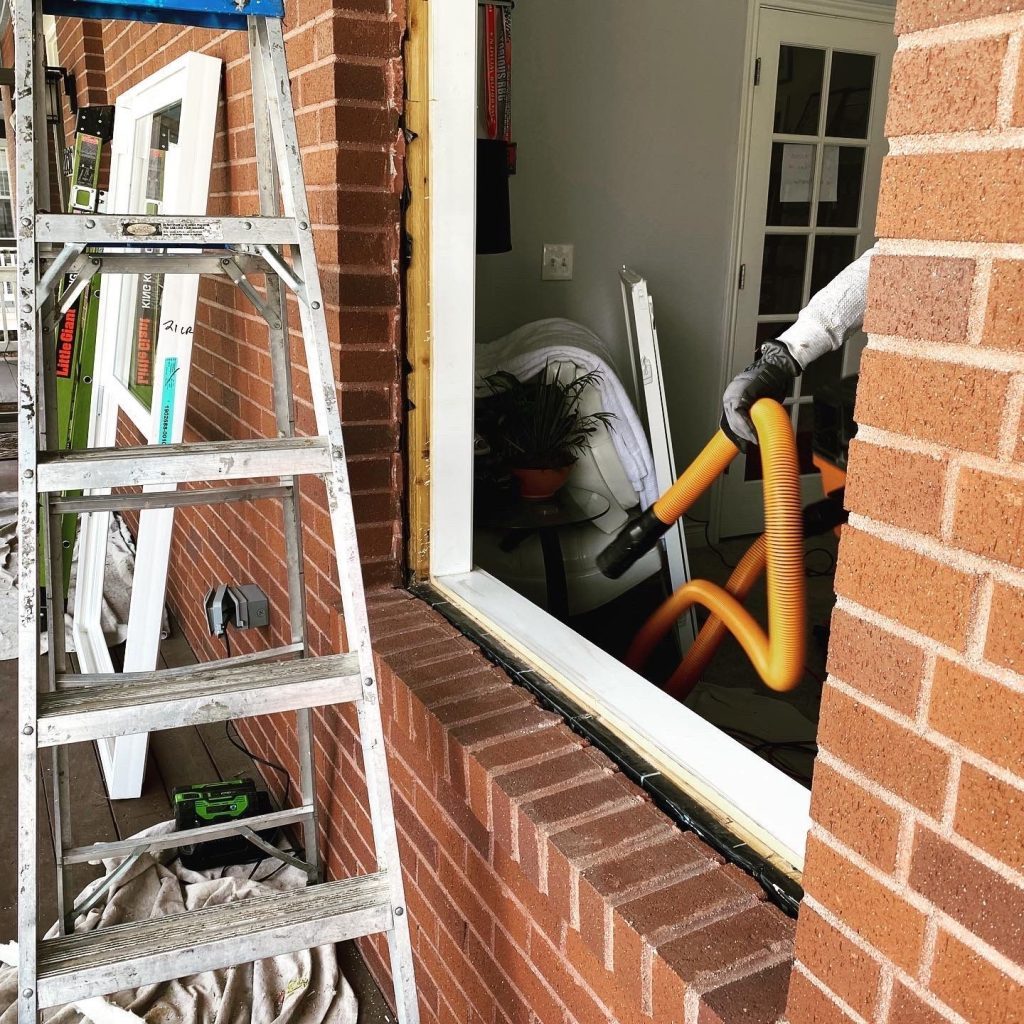
Replacement block frame (also known as pocket replacement) windows are slightly different than full-frame replacement windows and are built to fit inside an existing window frame. While the existing window sashes and exterior stops of the window should be taken out for the new window to be installed, pocket replacements allow homeowners to keep the original frame, trim, siding and casing.
Just as with full-frame window replacement, the wall exterior surrounding the window opening will play a role in how the pocket replacement process works, this time with fewer steps. Unlike full-frame replacement window removal, the existing window is cut out, typically with a reciprocating saw (Sawzall).
The replacement window can be placed into the opening and existing frame and attached to the frame with screws. Foam insulation is used in the space between the window and frame. Caulking prevents water intrusion and then trim is installed to complete the look of the window.
Often, some minor touch ups on the interior drywall, paint, etc. and possibly the exterior siding, stucco, etc. will need to be made. In general, block frame replacement is much simpler and less invasive than full frame replacement and is the more cost-effective installation option.